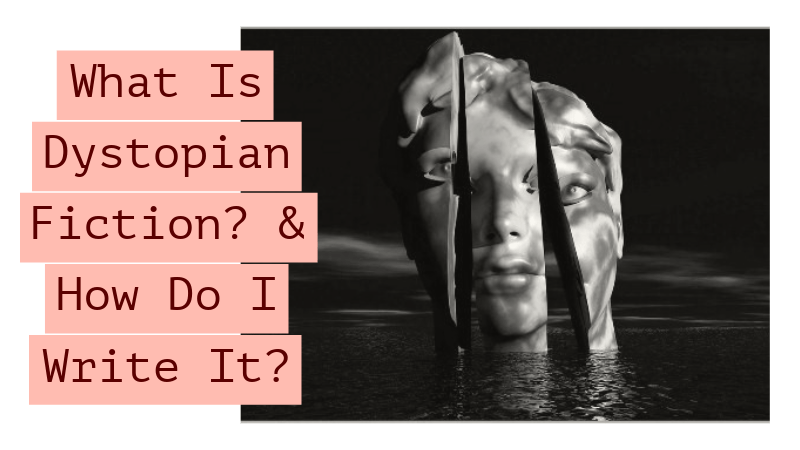
What Is Dystopian Fiction? & How Do I Write It?

Dystopian fiction is an increasingly popular genre, even though it depicts all the worst places ever! We tell you all about the genre and give some hints on how to write Dystopian stories.

What Is Dystopian Fiction?

Basically, Dystopian fiction talks about an author’s idea of hell on Earth. As a genre, it’s as old as humanity. Dystopian fiction is often considered the ugly twin of Utopian fiction. So, let’s take a brief look at this.

As a genre, Utopian fiction existed first. It takes its name from Thomas More’s novel Utopia (1516). ‘Utopia’ sounds very much like the Greek ‘eutopia,’ meaning ‘good place.’ In his book, More describes an ideal society on a secluded island, where humanity can live happily ever after. As a literary genre, Utopian fiction has its own characteristics.

You can read up on this in this blog: What Is A Utopia? How Do I Write One?

Now, back to the Dystopian fiction. The Greek prefix ‘dys-‘ means ‘bad, diseased, abnormal, difficult.’ That already tells you that Dystopia is the ‘bad place.’ Dystopian fiction describes a world much worse than our own. In these stories, people live in a dangerous, oppressive, and unfair place. Let’s look at some more characteristics.

1. The Mission.

This is the most important element. Dystopian stories are all geared at showing us what could happen in the future if the current society continues on its path. It’s a call to action to stop in our tracks and to change our course. If not, we’ll go to that fictional hell described by the author.

The mission can be about our society as such (like ‘The Hunger Games’, depicting totalitarianism and media manipulation), or about a smaller aspect (climate change, for example, or the outbreak of a virus).

2. Distance to the Reader’s Present

Dystopian stories need to be set apart from our present reality. This distance lets us accept the message of the story. Without it, readers would take the criticism personally and ultimately dismiss it.

The author can create this distance by time (science fiction or historical fiction), by place (inventing a new city or even another planet), or by manner. 

Distance by manner can involve fantasy, but full-blown fantasy creates too much distance. The readers would no longer transfer the Dystopian warning to their own reality. This would ruin the story’s mission.

A smart way to create distance by manner is to create an alternative history starting at a specific event in the past.

The TV show ‘The Man In The High Castle’ works like this. The alternative historical timeline starts with a different outcome of the Second World War. The story explores how the world would have been under Nazi rule. This parallel universe seems uncanny because it is so similar to our own world and yet so strikingly different.

3. Setting

The author must be meticulous about worldbuilding. Even if the Dystopian story is mostly set in our own day and age, the rules and laws of that Dystopian society need to differ from our own, and yet still form a consistent system. Inconsistency makes the story lose its magic.

4. The Guide Character

Both Utopian and Dystopian stories require a character who guides the readers into the world of the story. It is through these characters that we explore the set of rules of this new world.

Utopian novels have a strong connection to our own world. Usually, there’s a character visiting the Utopian world first, and then telling the story when back home. The guide character here is usually a witness.

A Dystopian story may have that (but doesn’t have to). Usually, it’s the main character (MC) who serves as the reader’s guide. Readers need to be able to identify with the MC, as this character either experiences or witnesses the rebellion against the oppressive system.

Central Themes Of Dystopian Fiction

Most Dystopian stories have certain themes in common. Here are a few:

1. Control/oppression

There’s always a dictator or an elitist group in charge. They control society through government, bureaucracy, and/or technology. The spectrum of control can range from mere surveillance to psychological and even physical control (birth control, or mind control through implants, for example). 

2. Loss of individualism to a collective ideology

This ties in with the general totalitarian feel of most dystopias. It’s the logical consequence of the complex set of rules of oppression.

3. Hostile environment

If the environment threatens the existence of the Dystopian society, then people have nowhere to escape. This is another form of control, serving as an excuse to herd people together in confined spaces.

4. A scapegoat

A scapegoat, a universal threat, or a common enemy all serve to unite the people. It camouflages the motives of the oppressive government. It makes it easier to control the people.

5. Survival

The need for survival is how the oppressive government justifies its control. However, this is also the reason for the MC’s rebellion, as the MC needs to fight for the survival of the individual.

Let’s Write Dystopian Fiction

If you’d like to try writing in this genre, here’s a word of warning. There’s no dabbling. There’s no pantsing. As a writer, you need to plot meticulously.

Here’s your action plan:

  1. Decide what aspect of modern society aggravates you the most. This will serve as the mission of your story. Amplify and exaggerate as much as you can.
  2. Decide on how you can employ the element of distance in your dystopia (distance by time? By place? By manner?). Build your world. Make sure it is consistent.
  3. Devise a protagonist. How can your MC’s experiences show the rules of this new world to the reader? Beware of too much telling.
  4. How does your MC get into conflict with your dystopian world? Is there an area where your MC doesn’t feel at home? This is where the MC’s rebellion will start.
  5. What’s the MC’s inner motivation? What are the MC’s strengths that might help win the conflict?
  6. Will the MC win? Or lose? What does the MC’s rebellion do to change the dystopian world?

The Last Word

Dystopian fiction is a genre popular with authors and readers alike. It doesn’t have to include outright violence, and it doesn’t have to end up in chaos. But it’s a great way to show the troubles and conflicts of our present day. What do you think could be done about it all?  Have a go and write your own Dystopian fiction!

Further Reading

Here are some classics of this genre:

  1. Jonathan SwiftGulliver’s Travels (1726)
  2. H.G. WellsThe Time Machine (1895)
  3. Aldous HuxleyBrave New World (1932)
  4. George OrwellNineteen Eighty-Four (1949)
  5. William GoldingLord Of The Flies (1954)
  6. Lois LowryThe Giver (1993)
  7. Suzanne CollinsThe Hunger Games (series, starting in 2008)
  8. Ernest ClineReady Player One (2011)

Please check out Wikipedia’s list of Dystopian fiction.

Susanne Bennett

By Susanne Bennett. Susanne is a German-American writer who is a journalist by trade and a writer by heart. After years of working at German public radio and an online news portal, she has decided to accept challenges by Deadlines for Writers. Currently she is writing her first novel with them. She is known for overweight purses and carrying a novel everywhere. Follow her on Facebook.

What Are Themes In Children’s Stories? 10 Powerful Recurring Themes In Children’s Stories

What are the themes in children’s stories? We discuss what a theme is and what the 10 powerful recurring themes in children’s stories are.

What do children want from a story?

Children want three basic elements in a story: suspense, characters who are believable, and characters who act to solve problems. We find our themes in the problems.

Superficially speaking, children like stories that include adventure, mystery, excitement, discovery, daring, novelty, and humour.

Ad ends in 11

I want to repeat a quotation from my first post in this series on writing for children: William Nicholson had C.S Lewis say in Shadowlands: ‘We read to know we are not alone.’

Children want to know that there are ways to cope with dilemmas. Writers must offer ideas and strategies that show children they are not alone.

What are themes in children’s stories?

I have included a list of themes that deal with issues that are important to this youthful audience. They cover the anxieties, fears, and desires that children experience. There are many plots you can choose as vehicles for these stories, but all of them need the protagonist to find a way to address a problem.

What Is A Theme?

A theme can be found by answering one, or both, of these questions:

  1. What does the protagonist learn about him or herself in the story?
  2. What does the protagonist learn to cope with in the story?

[Recommended reading: 3 Steps That Will Help You Find Your Story’s Theme]

10 Powerful Recurring Themes In Children’s Stories

  1. Courage.
  2. Friendship.
  3. Belonging/Identity.
  4. Family.
  5. Loss/Grief.
  6. Growing Up.
  7. Anger.
  8. Suffering.
  9. Jealousy.
  10. Love.

Examples from popular fiction:

  1. In Charlotte’s Web, Wilbur survives because of the love and friendship of Fern and Charlotte.
  2. The Harry Potter series includes all these themes, but the most prominent theme is finding the courage to face evil so that good can prevail. You can read more about the other themes in the books in this post.
  3. The main themes in The Hunger Games series are: suffering in an unequal and unjust society; loss of loved ones; and courage. Katniss has to find the courage to survive physically, to fight an unjust system, and to deal with loss and grief.
  4. In Diary of a Wimpy Kid: The Ugly Truth, Greg has to deal with the reality of growing up.
  5. In Where the Wild Things Are, Max is sent to his room without dinner for disrespecting his mother. The author deals with Max’s anger by taking him on a trip to the magical land of the wild things.

Remember that the complexity and depth of the theme changes depending on the age level for which you are writing.

TOP TIP: If you want to learn how to write for children, sign up for kids etc. online

Children want to have fun

Remember that writing with a theme in mind does not mean that you have to preach. In fact, you should avoid it. You have to show and tell in these stories and reveal the theme through the development of the protagonist.

Suggested reading: Don’t Ever Do This When You Write For Children

If you want to show a theme rather than preach, you may want to bear these in mind:

(The younger the child, the more true these will be.)

  1. Be honest. Children are direct in their thoughts and actions.
  2. Write to amuse. Children of all age groups respond to humour.
  3. Look at the world through their eyes. Children like stories that poke fun at authorities.
  4. Write in the moment. Everything is new to children and they live in the present.

In my next post, I will write about creating characters for children’s stories.

 by Amanda Patterson
© Amanda Patterson

How To Use Contrast In Writing

What is contrast in writing? We explore how to use contrast in writing with 7 different types of contrast (with examples) that you can use in your writing.

What Is Contrast In Writing?

Contrast in writing can be used as a literary device to compare. It is commonly used in many works of fiction. It is ‘the state of being strikingly different from something else in juxtaposition or close association.’ (Source: Oxford Dictionary) Basically, it means comparing two things to show the differences between them.

How To Use Contrast In Writing

Back in the day, when cowboy shows were popular on afternoon television, it was easy to see who the good guys were – white hats, and who were the baddies – black hats. That kind of contrast is way too on the nose. It was then. It certainly is now. When it comes to storytelling, there a number of different ways in which you can use contrast. We’re going to look at seven of them – with examples.

1. Juxtaposition

The most famous use of juxtaposition in literature is the opening paragraph of Charles Dickens’ A Tale Of Two Cities’. Without going into any political or geographical detail, Dickens’ paragraph places the reader right into a location rife with danger, despair, upheaval, and confusion. It puts the reader on the edge of their seat right at the beginning.

“It was the best of times, it was the worst of times, it was the age of wisdom, it was the age of foolishness, it was the epoch of belief, it was the epoch of incredulity, it was the season of Light, it was the season of Darkness, it was the spring of hope, it was the winter of despair, we had everything before us, we had nothing before us, we were all gong direct to Heaven, we were all going direct the other way…”

If you use contrast in terms of phrases, try not to use clichés. Yes, I know Dickens used them in this opening paragraph, but a) he’s Dickens, and b) the way he used them here matters. You’re not Dickens. Try to use unexpected words, Instead of ‘light and dark’ find words that either mean the same thing or evoke the same meaning.

You can also have juxtaposition in the different characters in your book – kind vs cruel, rich vs poor, content vs restless.

In North and South by Elizabeth Gaskel, the contrast between the mill owners and the workers are brilliantly contrasted. We are taken into the world of both by the main protagonist, Margaret Hale. We see them through her eyes. We understand and have empathy for both because we can see both points of view. We want both ‘to win’. It keeps us glued to the book. Glueing your readers is good.

2. Cognitive Dissonance

The act of holding two different thoughts and beliefs as true at the same time. This often leads to inner conflict within the character. ‘She loved him, and yet would die a happy woman if she never saw him again, even though she knew she would long for him every day, miss him sitting across the dinner table each night. No, she hated him, and prayed that he would stay.’

This kind of turmoil will inevitably lead to actions that will drive the dramatic arc of the book’s plot. Shakespeare was a master craftsman at cognitive dissonance – think of Macbeth and his internal struggle against killing his friend vs attainting the throne.

If your character has no cognitive dissonance, he or she is at best a psychopath or at worst, a two-dimensional character.

3. Fish Out Of Water

Being a fish out of water doesn’t necessarily mean the entire person doesn’t belong, it could just mean that the hero would rather no one knew about his heroic deeds. When they are discovered, his discomfort, his fish-out-of-water-ness, is in the acclaim, news interviews, his picture in the paper, etc.

Another fish-out-of-water type would be a character in a time-travel story. Just think of Marty McFly in Back To The Future. A normal, average young man transported from 1985 back to 1955. To the people he encounters there’s something just a little off about him. Not in a bad way, more as if he were a stranger from another country whose experience and knowledge is based on hearsay.

Forest Gump, the titular character from the novel by Winston Groom, could have been on the autism scale. He could either be a ‘fish out of water’ or an ‘odd person out’.

4. Odd Person Out

Legally Blonde is a perfect example of an odd person out. By the end of the film, she may still not be the archetypical lawyer from Harvard, but she has earned her place and stayed true to herself. The odd person out can be a breath of fresh air.

Another ‘odd person out’ is Mr Darcy. While the world around him has more easy manners and interactions, and is prepared to be pleased, Darcy’s upbringing, his family’s expectations of him, his wealth, pride, and shyness, tend to put him on the outside of any circle in which he finds himself. This includes the circles in which he is used to move – mainly because he’s bored to tears of them all. The trouble is, he doesn’t really know how to act in the new circles of Longbourn and Meryton in Pride And Prejudice by Jane Austen.

5. Internal Dichotomies

Inspector Javert, in Les Misérables by Victor Hugo, is a policeman whose passion for the law and justice is turned on its head when Jean Valjean, whom he has hunted for years, shows him mercy instead of killing him. Both are true at the same time – law and mercy. His internal dichotomy is so powerful that he can’t reconcile them and ends his life, Think of Hamlet’s need to keep Ophelia safe from the probable bloodshed in the near future vs his having to resort to breaking her heart to force her to leave. His internal struggle with this makes everyone think him mad.

Internal dichotomies, the internal arguments a character has make them interesting and more human, even if it’s just, ‘I really want chocolate cake, but I’m on diet, but I really want chocolate cake, but the wedding dress is already tight!’

6. Opposites Attract

This is an oft-used trope in novels, especially romance. It really only works in fiction. After all, she wants to go to her family in the country every weekend and he plays tennis at league level at the sports club down the road from their London home. He wants to go clubbing every night and she’s an introvert who is noise sensitive. Somethings got to give, and it’s usually the relationship.

7. Contrasting Descriptions

Cities are replete with juxtaposition – civic buildings vs the dirty alleys. They not only juxtapositions in their looks but even more in their intent and population. In one there is great privilege, wealth, corruption, greed, and racism – a dank alley of human emotions and actions. While in the other there is generosity of spirit, an inclusivity, a kindness, a strength in the despair, a community among the outcast – an invisible palace of goodness. Nothing is as black and white as that; I use these merely as examples.

Another source is the weather. A wonderful event is taking place in your book, a wedding for example, but raging around the church is a violent thunderstorm. A ship could be caught in the doldrums. The sea is as still and silent as a sheet on an unused  bed. But the men on board are slowly going insane from boredom, the heat and the lack of water, despite seeing nothing but water stretching out to the horizon.

What makes contrast in writing exciting and fun is creating something marvellous in words that didn’t exist before.

The Last Word

If you’d like to write for childrenyoung adults, or adults, why not sign up for one of the rich and in-depth courses that Writers Write offers to learn how to write the best book you possibly can.

Elaine Dodge

by Elaine Dodge. Author of The Harcourts of Canada series and The Device HunterElaine trained as a graphic designer, then worked in design, advertising, and broadcast television. She now creates content, mostly in written form, including ghost writing business books, for clients across the globe, but would much rather be drafting her books and short stories.

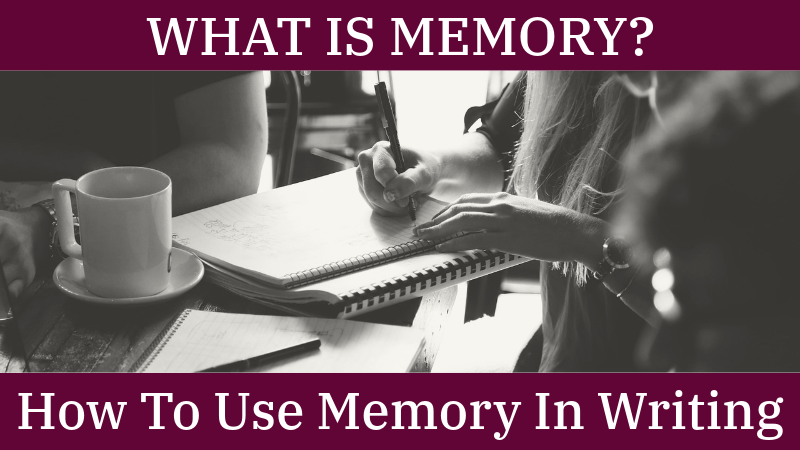
What is Memory? & How to Use It in Writing.

In this post we look at what memory is and how to use memory in writing.

What Is Memory?

Memory is a wonderful thing. Many parts of your brain work together to collect, encode, store, and retrieve sensory, short-term, and long-term recall of events, people, and experiences you’ve had throughout your life. Sometimes, especially with trauma, those memories can be buried deep within your mind. Your brain is trying to protect you from those memories. At other times, a memory is such a beautiful one that even the lightest perfume, like vanilla, can trigger feel-good emotions within you.

Memories

All your memories will fall into either the ‘these are a few of my favourite things’ column. Others will be in the ‘do not open this box’ column. But all of them are useful to a writer. They are an almost inexhaustible resource. Don’t be afraid to use them. In fact, using them is almost a requirement when creating a good story.

You will have memories of:

  1. People you loved – parents, grandparents, aunts or uncles, siblings, cousins, friends, boyfriends, spouses, children.
  2. People with whom you were friends or enemies.
  3. People you met once.
  4. People you interact with everyday but don’t know personally – your local coffee shop barista, for example.
  5. People you see everyday but don’t really interact with – the security guard outside the building you pass on the way to work.
  6. Interiors – offices, malls, shops, doctor’s surgeries, hospitals, vet’s waiting rooms, cars, ships, trains, places of worship, pubs, restaurants etc.
  7. Locations – cities, game parks, lumber yards, garden shops, drive-in movie theatres, ice-rinks, the beach, theatres, public swimming pools and their change rooms, university campuses, school yards, etc.
  8. Views – out of windows, from the edge of a cliff, out of an airplane, from the beach across the desert, across a field, in a forest. Don’t forget, views are never one way. Standing on a beach looking out over the sea is one view, but so is turning around and looking back at the fishing village, port, town, forest, desert, other people on the beach.
  9. Animals – pets is an obvious one, but there are also zoo animals, animals you saw in the wild, creatures you see every day; the frog that lives under the broken pot in the garden, the neighbour’s cat, the crow that sits on your gatepost every morning, the hadadas digging for worms on the lawn etc.
  10. Homes – the one(s) you grew up in, your grandparents’, your friends’, the boarding school you might have gone to etc.
  11. Food and Drink – home cooked, at restaurants, take-aways, etc.
  12. Clothing – school uniforms, military uniforms, wool, cotton, synthetics, wedding dresses, Lycra swimsuits that didn’t fit properly, socks that kept falling down, etc.
  13. Events – first day at junior or senior school or university, on your first job, being fired, made redundant, first date, breaking up, coming-of-age events, engagements, weddings, births, deaths, funerals, the look of delight or disappointment on a parent’s face, finding an old love letter your grandad wrote – big all small our lives are filled with events that can be translated into our writing.
  1. Food and Drink – home cooked, at restaurants, take-aways, etc.
  2. Clothing – school uniforms, military uniforms, wool, cotton, synthetics, wedding dresses, Lycra swimsuits that didn’t fit properly, socks that kept falling down, etc.
  3. Events – first day at junior or senior school or university, on your first job, being fired, made redundant, first date, breaking up, coming-of-age events, engagements, weddings, births, deaths, funerals, the look of delight or disappointment on a parent’s face, finding an old love letter your grandad wrote – big all small our lives are filled with events that can be translated into our writing.

Every memory is a mine of information.

  1. Physicality – what does the person, place, mode of transport look like?
  2. Senses – what did it/they smell like, sound like, taste like, behave.
  3. Surrounds – was the weather trying to kill you, or did it taste like champagne.
  4. At the time emotions – how did you feel at the time you experienced the event?
  5. Looking back emotions – our feelings about our memories change. How do they make you feel now.
  6. Music – a song can unleash a significant memory.

How To Use Memory In Writing

Yes, I hear you say, but I’m writing a space adventure not a memoir! Maybe, but the memory of not being picked up from school because your parents forgot you could easily be used to describe the feeling that an astronaut may feel if their spouse isn’t there to welcome them home after a mission. Of the feeling their child feels when they can’t be there for the kid’s sports day because they’re on a mission to Mars. You don’t have to describe the feeling you felt being forgotten at school, but you can use that confused sadness and anger to inform your protagonist’s emotion.

Every memory can feed your writing, whether you’re writing a period romance, a contemporary thriller, a comedy, or a dystopian story. While it may be your memory, it can be the thing that your character is experiencing. Rummage through your memory for something similar that you’ve experienced that can help you develop believable reactions, emotions, and experiences for your characters. The plot of your book is a series of steps from A to Z. The story is the experiences, encounters, and emotions your characters go through. Use your memories to give those life.

Memories may also be unreliable. This is great for causing conflict in fiction writing.

The Last Word

If you’d like to write for childrenyoung adults, or adults, why not sign up for one of the rich and in-depth courses that Writers Write offers to learn how to write the best book you possibly can.

by Elaine Dodge. Author of The Harcourts of Canada series and The Device HunterElaine trained as a graphic designer, then worked in design, advertising, and broadcast television. She now creates content, mostly in written form, including ghost writing business books, for clients across the globe, but would much rather be drafting her books and short stories.

Today’s Quotable Quote About Writing: Carlos Ruiz Zafón.

Carlos Ruiz Zafón (25 September 1964 – 19 June 2020) was a Spanish novelist known for his 2001 novel La sombra del viento (The Shadow of the Wind). The novel sold 15 million copies and was winner of numerous awards; it was included in the list of the one hundred best books in Spanish in the last twenty-five years, made in 2007 by eighty-one Latin American and Spanish writers and critics.

(Source: Wikipedia)

A Quick Start Guide To Writing Romance

In this post, we provide a quick start guide to writing romance for all aspiring writers in the genre.

There’s a romance novel for everyone! My favourites include anything by Jane Austen and Georgette Heyer. There are no books on my shelves with covers that fall into the category of ‘Dude, where’s your shirt?’. That’s the good thing about this genre. There are so many sub-genres that everyone; writers, and readers alike, will be happy.

A Quick Start Guide To Writing Romance

 Why Write Romance?

The romance genre is the biggest selling genre on the planet. In 2021, romance book sales on Amazon reached US$1.44 billion. The closest competitor was Crime/Mystery which made US$728.2 million. Not even close.

Why Does Romance Outsell Every Other Genre?

It’s simple really, romance sells as well as it does because it gives the reader a taste of the romance for which they themselves are longing. The romance novel provides hope. Setting it in an exotic location tells the reader that their ‘own true love’ is ‘out there somewhere’.

Choose Your Sub-genre

Before drafting any book, romance or not, your genre/sub-genre will always be the first decision you make.

How many sub-genres are there?

Imagine opening a box of Quality Street. Everything’s chocolate, right? But not all the centres are the same. With romance, even the sub-genres have sub-genres! Romance/Sweet and Clean/Alternative History/Vampires/Victorian Paris – see what I mean?

The age group of your readers may play an important part in your choice of sub-genre. Are they young adultnew adult, or adult? These options all dictate plot, language, characters, and setting.

Choose Your Heat Level

Do romance novels need sex scenes? Jane Austen didn’t have any. Whether you include them or not depends entirely on you, the age of your readers, and the needs of your story.

‘Heat level’ is the industry term for level of sensuality, a.k.a. sex in a book. There are five.

In the first, your characters will be lucky if they hold hands.

In the second there may be one or two tender love scenes but no sex. But this doesn’t mean the book will be dull. There’s no sex in any Georgette Heyer romance and they are some of the most enduring romance novels of all time.

The third and fourth have increasing amounts of sex. Finally, there is Erotic/Erotica.

If you do choose to include sex scenes, bear in mind that the scene must advance the plot or show character development. In fact, all scenes in every genre, whether they are sex scenes or not, should do this. If you can, make them do both.

HEA Or HFN?

Should a romance have an HEA (Happy Ever After), or at least an HFN (Happy For Now)? Many writers, and readers, say yes. Others that say books like Gone With the Wind are romances. And yet that book is famous for, frankly, not giving a damn if it has a happy ending or not.

Personally, I think it all depends on what sort of romance novel you want to write. The Notebook is the story of a romance, but its end (spoiler alert) is tragic. So is that of Romeo and Juliet.

Sign up for our romance writing course: This Kiss

The Meet-Cute and Will-They-Won’t-They

There are two other foundations upon which all romance novels are built. These are the ‘meet cute’, and the ‘will-they-won’t-they’ question.

The ‘meet-cute’ doesn’t have to be the inciting incident. It also doesn’t need to be cute.

In Pride & Prejudice, the meet-cute between Darcy and Elizabeth, is neither the inciting incident, nor is it cute. Before they are introduced, Elizabeth overhears Darcy insult her. It’s not surprising then that Elizabeth is against him from the start. Their potential romance appears doomed. From the beginning, the question of will-they-won’t-they grips the reader.

This question drives all romances, including Gone With The Wind. So, make sure your novel asks it, and answers it, in a unique way.

Location, Location, Location

Do you like doing research? The era and location of your book will determine the amount of research required. A contemporary romance set in your hometown needs far less research than an historical romance set in a foreign country. The Far Pavilions by M.M. Kaye is a good example of this and is well worth reading.

What Do Rhett Butler, Fitzwilliam Darcy & Gabriel Oak Have In Common?

One is a rogue, one is an upper-class snob, and one is a hardworking, honest farmer. Yet, they are all completely compelling.

Compelling heroes need compelling heroines. No cardboard cut-out characters! They must:

  1. Be complex, deeply rich characters.
  2. Have interesting backstories.
  3. Grow through strong character development.
  4. Have chemistry with their soon-to-be significant other.
  5. Work for the reward of love.

he Whisper Of Sweet Nothings

Great dialogue can be one of the most difficult things to write. But it’s an essential skill. Bad dialogue is boring in life, and on the page. It will kill any romance. It must suit the characters, the era, the location, and be realistic.

There are bonus points if it is also original. It’s a tall order. But it can be done.

Compare the dialogue between Rochester and Jane in Jane Eyre to that in the TV series The Gilmore Girls between Luke and Lorelai, for example. They are both true to their era and sub-genre. One is repressed and gothic, while the other is hilarious, and fast-paced. But both ring true.

That is the ultimate test of all romance novels. Does it ‘ring true’? Does it ring true in every aspect, from sub-genre, the big questions, location, era, and character, to passion, dialogue, and ending?

by Elaine Dodge. Elaine is the author of The Harcourts of Canada series. Elaine trained as a graphic designer, then worked in design, advertising, and broadcast television. She now creates content, mostly in written form, for clients across the globe, but would much rather be drafting her books and short stories.

Today’s Quotable Quote About Writing: Cheryl Strayed.

Cheryl Strayed born September 17, 1968) is an American writer and podcast host. She has written four books: the novel Torch (2006) and the nonfiction books Wild: From Lost to Found on the Pacific Crest Trail (2012), Tiny Beautiful Things (2012) and Brave Enough (2015). Wild, the story of Strayed’s 1995 hike up the Pacific Crest Trail, is an international bestseller and was adapted into the 2014 Academy Award-nominated film Wild. (Source: Wikipedia)

106 Ways To Describe Sounds

(Source: Writers Write)

Writers know that using the senses is a great way to make stories come alive. Use this comprehensive list of words that describe sounds when you write.

According to Oxford Dictionary, to hear is to ‘perceive with the ear the sound made by (someone or something)’. Sounds are ‘vibrations that travel through the air or another medium and can be heard when they reach a person’s ear’.

You have to use the five senses when you write. Readers want to experience what your characters see, smell, hear, taste, and touch. Using the senses is one of the best ways for writers to learn how to show and not tell.

Writers Write is a resource for writers and we have written about words that describe tastesmell, and touch in previous posts. (We even have one for words that describe colours.) In this post I have included words that describe sounds.

106 Ways To Describe Sounds

General Words Describing Sounds

  1. audible – a sound that is loud enough to hear
  2. broken – a sound that has spaces in it
  3. emit – to make a sound
  4. grinding – a sound of one hard thing moving against another
  5. hushed – a sound that is quiet
  6. inaudible – a sound that is difficult to hear
  7. monotonous – a sound that is always the same and never gets louder or quieter, or higher or lower
  8. muffled – a sound that is not easy to hear because it is blocked by something
  9. plaintive – a sound that has a sad quality
  10. rhythmic – a sound that has a clear, regular pattern
  11. staccato – a sound where each word or sound is clearly separate

Describing Pleasing Sounds

  1. dulcet – soft and pleasant
  2. lilting – a sound that has a rising and falling pattern
  3. listenable – easy to listen to
  4. mellow – a soft, smooth, pleasant sound
  5. melodic – beautiful sound
  6. musical – sounds like music
  7. pure – a clear, beautiful sound
  8. rich – a sound that is strong in a pleasant way
  9. soft – quiet and peaceful
  10. sonorous – a sound that is deep and strong in a pleasant way
  11. sweet – a pleasant sound

Describing Noisy Sounds

  1. at full blast – as loudly as possible
  2. almighty – used for emphasising how loud something is
  3. brassy – a sound that is loud and unpleasant
  4. deafening – a sound so loud you cannot hear anything else
  5. ear-splitting – extremely loud
  6. explosive – a sound that is loud and unexpected
  7. howling – a continuous, low, loud noise
  8. insistent – a continuous, loud, strong noise
  9. loud – a sound that is strong and very easy to hear
  10. noisy – a sound that is full of noise
  11. percussive – a sound that is short, like someone hitting a drum
  12. piercing – a sound that is very  loud, high, and unpleasant
  13. pulsating – strong, regular pattern
  14. raucous – rude, violent, noisy
  15. resounding – a sound that is loud and that continues for a while
  16. riotous – lively and noisy
  17. roaring – a deep, loud noise
  18. rowdy – noisy and causing trouble
  19. sharp – a sound that is sudden and loud
  20. shrill – a sound that is loud, high, and unpleasant
  21. thundering – extremely loud
  22. thunderous – loud
  23. tumultuous –  a sound that includes noise, excitement, activity, or violence
  24. uproarious – extremely noisy

Words That Help You Show And Not Tell

Many of these words that help you show and not tell are examples of onomatopoeia. These words imitate natural sounds. ‘It creates a sound effect that mimics the thing described, making the description more expressive and interesting.’

Here are some examples:

  • The bees buzzed outside my window.
  • The wind sighed.
  • The leaves crackled and crunched under his feet.

Use this list to make your writing come alive.

  1. babble – a gentle, pleasant sound of water as it moves along in a river
  2. bang – to move, making loud noises
  3. beep – a short high sound or several short high sounds
  4. blare – to make a loud and unpleasant noise
  5. blast – to make a loud sound with a car horn
  6. bleep – a short high sound or several short high sounds
  7. boom – to make a deep loud sound that continues for some time
  8. caterwaul – an unpleasant loud high noise
  9. chime – a high ringing sound like a bell or set of bells
  10. chink – a high ringing sound when knocked together, or to make something do this
  11. clack -to make a short loud sound like one hard object hitting against another
  12. clang – a loud, metallic sound
  13. clank – a short, loud sound
  14. clash – a loud, metallic sound
  15. clatter – a series of short, sharp noises
  16. click – a short sound like the sound when you press a switch
  17. clink – to make the short high sound of glass or metal objects hitting each other, or to cause objects to make this sound
  18. cluck – to make a short, low sound with your tongue
  19. crash – a sudden loud noise, as if something is being hit
  20. creak – if something creaks, especially something wooden, it makes a high noise when it moves or when you put weight on it
  21. drone – to make a low continuous noise
  22. fizz – a soft sound that small gas bubbles make when they burst
  23. groan – a long, low, sound
  24. growl – a low, unpleasant noise
  25. grunt – to make a short low sound in your throat and nose at the same time
  26. gurgle – the low sound water makes when it is poured quickly from a bottle
  27. honk – to make a loud noise using a horn, especially the horn of a car
  28. hoot – to make a short loud sound as a warning
  29. mewl – crying with a soft, high sound
  30. moan – a long, low sound
  31. neigh – to make a high loud sound like a horse’s neigh
  32. peal – if a bell peals, or if someone peals it, it makes a loud sound
  33. peep – if a car’s horn peeps, it makes a sound
  34. ping – to make a short high sound like the sound of a small bell
  35. pipe – to make a very high sound, or to speak in a very high voice
  36. pop – a sudden noise like a small explosion
  37. putter – a short, quiet, low sound at a slow speed
  38. ring – to make a bell produce a sound
  39. roar – to make a continuous, very loud noise
  40. rumble – a continuous deep sound
  41. scream – to make a very loud high noise
  42. scream – to make a very loud high noise
  43. screech – to make a loud, high, and unpleasant noise
  44. scrunch – to make a loud noise like something being crushed
  45. sigh – a long, soft, low sound
  46. squeak – to make a short, high noise
  47. squeal – to make a long high sound
  48. squee – to make a loud high noise because you are excited or happy
  49. thrum- to make a low regular noise like one object gently hitting another many times
  50. thud – a dull sound when falling or hitting something
  51. thump – to hit against something with a low loud sound
  52. tinkle – to make a high, ringing sound
  53. wail – to make a long, high sound
  54. wheeze – a high sound, as though a lot of air is being pushed through it
  55. whine – a high, loud sound
  56. whirr – a fast, repeated, quiet sound
  57. whisper – to make a quiet, gentle sound
  58. whistle – to make a high sound by forcing air through your mouth in order to get someone’s attention
  59. yelp – a short, loud, high sound, usually caused by excitement, anger, or pain
  60. yowl – a long, loud, unhappy sound or complaint
  61. Use these words to describe sounds and make your writing come alive.

by Amanda Patterson

5 Guaranteed Ways To Bore Your Reader Writers.Write

Most beginners overwrite – padding their prose with unnecessary descriptions and characters. Here are 5 guaranteed ways to bore your reader.

There are times when I pick up a book and I think, ‘I can’t carry on.’ Even though I try to finish most of the novels I start, life is just too short to read badly-written, boring books.

Why are these books boring?

Most beginners overwrite – padding their prose with unnecessary descriptions and characters. This is mainly because they do not have a structured story with well-drawn characters and a cohesive, well-paced plot.  I have put together sure-fire ways that will help you if you want to bore your reader to tears.

5 Guaranteed Ways To Bore Your Reader

  1. Add heaps of backstory. Every page is important. Readers, publishers and literary agents make decisions about whether to carry on reading a book based on the first few pages. Do not waste anyone’s time with unimportant setting details and character histories. Introduce your main characters. Tell us where we are – briefly. Set up a great conflict with an exciting inciting moment. And write!
  2. Do not structure your novel. Reading a book seems incredibly daunting if you are lost in an inexperienced author’s stream of consciousness. A great story does not meander from one unrelated event to another. It needs to follow a path. Otherwise, readers will lose interest. They will worry about wasting their time as you muddle through the details.
  3. Do not create empathetic characters. It does not matter if you happen to love your unsympathetic psychopathic hero. The truth is that nobody will continue to read a novel without having an emotional connection to the main characters. They can be heroesanti-heroes or villains, but they all need flaws and redeeming qualities. Readers read stories because they want to relate to someone in the book. We want to know why the characters are acting the way they do.
  4. Leave unnecessary scenes in the book. I walk out of movie theatres when I watch a film where nothing happens. I stop reading books for the same reason. Authors cannot simply place characters on the page, add some dialogue and description and not move the story forward. Scenes should move your characters and your plot to the resolution of your story. If they don’t, cut them. Removing scenes keeps your story focused, your pace intense, and creates tension so that readers can’t stop reading.
  5. Describe everything. You do not have to tell readers everything. They are not stupid. Reveal information through action and dialogue. This does not mean that you leave description out. It means that you do not tell us what every character, town, tree, or house, looks like in mind-numbing detail. Your characters should interact with the setting. A reader should be able to see and hear and smell the novel through the words on the page.

Please do not make these five mistakes when you write. Remember that you are competing for a place in a crowded market. The Internet, television, movies, and smart phones have taken their toll and today’s reader will not tolerate long flowery sentences, insipid characters and pages of boring backstory. Writing like this is a guaranteed way to lose your reader in the first few pages.

by Amanda Patterson